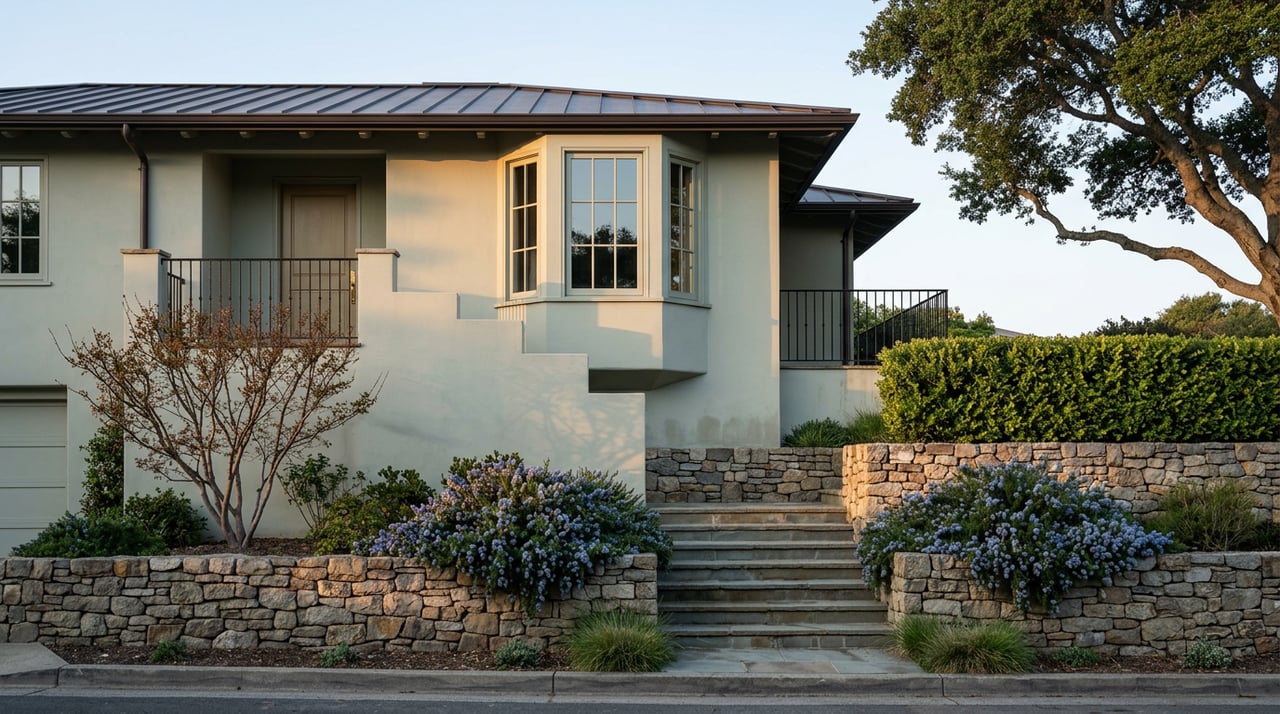
A homeowner in the hills above El Cerrito Plaza calls a contractor to get bids on a kitchen remodel, and the contractor asks a question the homeowner wasn't expecting: has the city's fire department been out yet? Not for the remodel. For the sale that hasn't happened yet, but will eventually, because the house sits inside a zone where selling now requires an inspection that didn't exist a year ago.
That's the real story in El Cerrito right now, and it has nothing to do with median prices or bidding wars. It's about a line the city drew in 2025, and how that line splits the market into two places that share a zip code but not much else.
The Appointment That Didn't Exist Before 2025
Last year, the El Cerrito City Council adopted an ordinance updating the city's Fire Hazard Severity Zones to match new maps from CAL FIRE, and along with the new maps came a new procedure: properties inside the High or Very High zones now have to complete a defensible-space and home-hardening inspection before they change hands. The ordinance also folded in the state's "Zone Zero" standard, which bars combustible material within five feet of a structure. Sell a house in one of these zones and you're required to request the inspection from the El Cerrito Fire Department and hand the buyer a disclosure report showing the results.
This isn't a suggestion buried in a homeowner newsletter. It's now part of the closing checklist for a defined slice of the city, and that slice maps almost exactly onto the hillside neighborhoods climbing toward Wildcat Canyon Regional Park and the Hillside Natural Area. A condo near the El Cerrito del Norte BART station doesn't touch this rule. A house three-quarters of a mile east, with a view of the bay, does.
Where the Line Actually Falls
El Cerrito reads as one city on a map and two markets in practice. To the west, the flats run along San Pablo Avenue and the two BART stations, El Cerrito Plaza and El Cerrito del Norte, where lots are compact, grades are gentle, and most of the housing stock is the mid-century bungalows and Craftsman-style homes the city has always been known for. To the east, the ground rises toward the Hillside Natural Area and Wildcat Canyon, and the same climb that produces the bay and Golden Gate views also brings some of the considerations on this list.
Here's how the two halves of the city actually compare at the point of sale:
| Requirement | Flats (San Pablo Ave / BART corridor) | Hills (toward Wildcat Canyon) |
|---|---|---|
| Fire hardening/defensible-space inspection before sale | Not required | Required in High/Very High zones |
| City plan-check line item for slide/seismic zones | Rarely triggered | Standard line item on permit submittals |
| Alquist-Priolo fault disclosure | Depends on parcel | More likely to apply near the fault trace |
| Geotechnical peer review on remodels | Uncommon | Standard for slopes over 30 percent, according to Burton Builders LLC |
None of this makes one half of the city a better place to buy than the other. It means the two halves close on different timelines, and a seller or buyer who treats El Cerrito as one uniform market is going to be surprised by something.
The Fault Line Underneath the Fire Line
Fire isn't the only reason hillside transactions carry extra paperwork. The Hayward Fault runs through El Cerrito, and where a specific parcel's boundary intersects the state's mapped Alquist-Priolo Earthquake Fault Zone, California law requires the seller to disclose that fact to the buyer under the Natural Hazard Disclosure Statement, a requirement that has existed since the 1970s and applies regardless of which brokerage or agent handles the sale. The fault is also known for slow surface creep rather than sudden rupture in most stretches, which is a different hazard profile than a one-time earthquake, and it's worth understanding the distinction rather than treating every fault reference the same way.
Not every hillside parcel sits inside the mapped zone. The way to know for certain is to check the specific address against the official maps maintained by the California Geological Survey, which is also the source real estate agents and title companies use to confirm whether a natural hazard disclosure applies. A flatland condo near the Plaza is far less likely to trigger this disclosure than a hillside single-family home, simply because of where the mapped zone happens to fall.
What This Costs in Time, Not Just Money
El Cerrito's own plan check submittal checklist includes a specific line for properties located in a slide zone or seismic zone, calling for additional geotechnical and soils documentation beyond what a flatland remodel needs. For hillside lots with slopes over 30 percent, that soils report typically goes through a second round of professional review before the city will sign off, and that peer review adds cost on top of the original consultant's fee, often by close to a third.
None of this is a reason to avoid the hills. It's a reason to start the clock earlier. A seller who waits until an accepted offer to discover the fire inspection requirement, or who learns about the Alquist-Priolo disclosure from a buyer's agent instead of proactively, is negotiating from behind. The sellers who do well in this part of the city are the ones who treat the inspection, the disclosure paperwork, and any outstanding geotechnical questions as pre-listing tasks, not escrow surprises.
Why the Hills Still Command a Premium
The extra diligence hasn't cooled demand for hillside inventory, and the recent numbers make that clear. Citywide, El Cerrito's median sale price came in near $1.1 million for the three months ending April 2026, down about eight percent from the same stretch a year earlier, a sign of a broader market that's normalizing after a hotter run. But in the El Cerrito Hills specifically, the median sale price over a comparable recent three-month window was closer to $1.36 million, with homes moving in a median of 17 days, among the fastest paces in the East Bay.
That gap says something the citywide median alone can't. Buyers aren't avoiding the extra paperwork that comes with hillside property. They're pricing it in and moving anyway, because the supply of view lots and larger parcels near Wildcat Canyon is tight enough that the inspection requirement and the geotechnical line items read as a known cost of entry rather than a deal breaker. The friction is real, but it hasn't outweighed the appeal of the location.
Getting Ahead of It
If you're weighing a hillside purchase against a flatland one in El Cerrito, the honest framing isn't "which is better." It's which set of tasks you'd rather manage. A flatland buyer near BART is signing standard disclosures and moving on. A hills buyer should expect to review a fire-hardening disclosure report, confirm whether the parcel falls inside the Alquist-Priolo zone, and ask what, if any, geotechnical work has already been done on the property.
If you're selling in the hills, the fire inspection and the disclosure paperwork are worth scheduling the moment you decide to list, not after you've accepted an offer. This is the kind of groundwork where having agents who've handled renovation and permitting questions directly, rather than only marketing finished listings, makes a real difference in how smoothly the file moves through escrow.
If you're trying to figure out where your own address falls on this map, or what a hillside home in El Cerrito is actually worth given everything above, BloomHomes Team has spent years working both sides of this city, from the flats near San Pablo Avenue to the ridge above Wildcat Canyon. You can browse current El Cerrito listings or get a sense of your own home's position in this market with an instant home valuation.
Frequently Asked Questions
Does the fire hardening inspection apply if I'm not planning to sell? No. The point-of-sale requirement is tied specifically to a transfer of ownership.
How do I know if my hillside home is in a High or Very High Fire Hazard Severity Zone? The city's Fire Hazard Severity Zones page links to the current CAL FIRE map for El Cerrito, and it's worth checking your specific parcel rather than assuming based on general location, since zone boundaries follow terrain and vegetation data rather than neighborhood names.
If my home already has a seismic retrofit, do I still need the Alquist-Priolo disclosure? Yes, if any part of the parcel intersects the mapped fault zone. The disclosure requirement is about informing the buyer of the zone designation itself, not about whether retrofit work has already been done. A completed retrofit is worth mentioning to buyers as reassurance, but it doesn't remove the legal disclosure obligation.
This article is general information, not legal, tax or financial advice. Consult a qualified professional about your situation.