Looking for more breathing room in the East Bay can feel like a constant tradeoff. You may want a home with a larger lot, a less dense setting, and easy access to daily essentials, but you also do not want to feel disconnected from transit, commute routes, or outdoor amenities. If Castro Valley is on your shortlist, there are solid reasons it stands out for space-seeking buyers, and understanding those reasons can help you decide whether the higher price point fits your goals. Let’s dive in.
Castro Valley Feels Less Dense
One of the clearest reasons Castro Valley appeals to space seekers is simple: it is less dense than some nearby East Bay options. Current Census figures show Castro Valley at about 3,943.6 people per square mile, compared with 7,878.4 in Oakland and 6,830.9 in San Leandro.
That difference shapes how the area feels when you drive through, walk around, or compare home types. In practical terms, you are often seeing a more suburban pattern with fewer tightly packed blocks than you would find in more urban parts of Oakland or denser parts of San Leandro.
County planning context helps explain why. Alameda County describes Castro Valley as the Castro Valley urban area plus surrounding canyonlands, which gives the community a broader, more open setting than a place built on a tighter city grid.
Lot Patterns Support More Space
If you care about yard size, setbacks, or just having a little more room between homes, Castro Valley’s planning framework is part of the story. Alameda County planning materials include rural residential zoning at 20,000 to 40,000 square feet, hillside residential lots at roughly 5,000 to 10,000 square feet depending on slope, and single-family residential at 7,500 square feet.
You will not find that exact pattern in every part of Castro Valley, of course, but it helps explain why some neighborhoods feel roomier than many inner East Bay areas. The built environment reflects a community where lot sizes can support a more open residential feel.
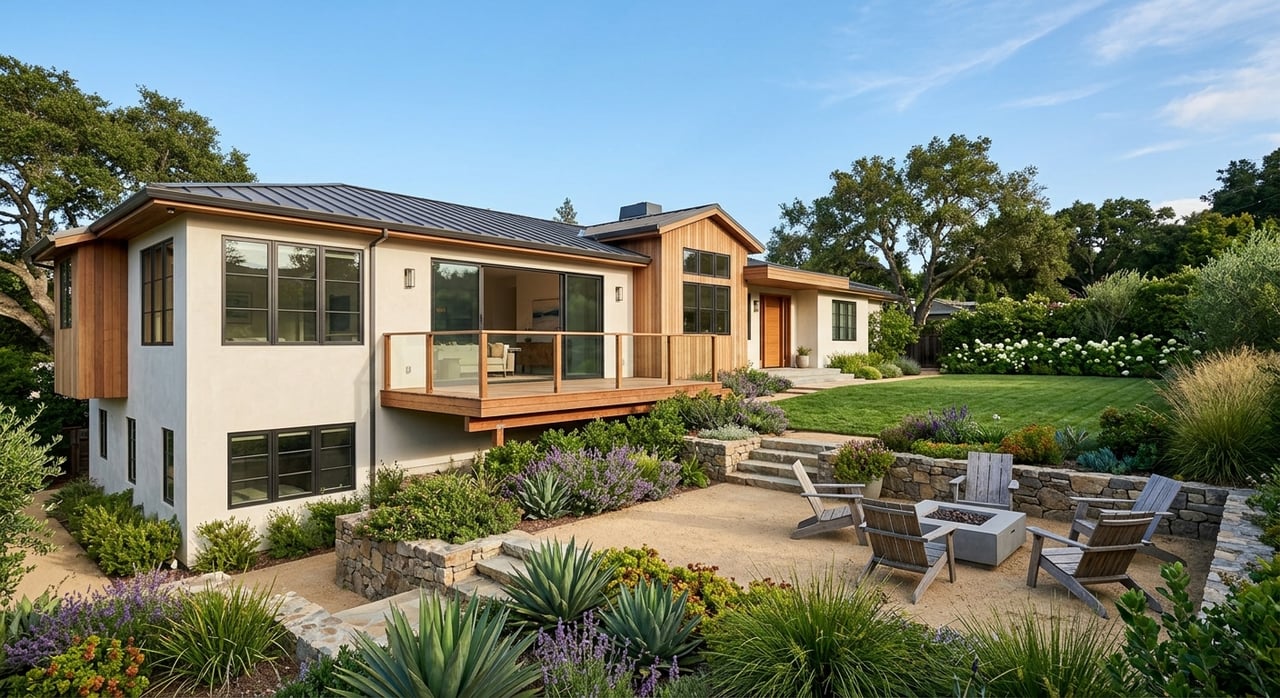
This matters if your definition of space goes beyond square footage inside the house. For many buyers, space means outdoor area, privacy, storage potential, or room to spread out over time.
Single-Family Homes Shape The Feel
Castro Valley’s housing mix also helps create its appeal. In Alameda County’s Castro Valley Area Plan background, 71.9% of the housing stock was single-family detached, while 18.5% was multifamily.
That planning baseline is useful because it gives you a sense of the area’s character. A housing stock with a strong single-family presence often feels different from neighborhoods where apartments and attached housing make up a larger share of the landscape.
The same county background also notes that multifamily units, townhouses, and mobile homes were generally closer to the central business district. So if you are comparing different parts of Castro Valley, you may notice that the housing form shifts depending on where you are.
Owner-Occupancy Adds Stability
Another reason Castro Valley often appeals to buyers looking for more space is its ownership pattern. Census figures show that 72.5% of housing units in Castro Valley are owner-occupied, compared with 42.3% in Oakland and 58.1% in San Leandro.
That does not guarantee any one neighborhood experience, but it does help explain why Castro Valley is often viewed as a place with a more established residential feel. Higher owner-occupancy can align with the kind of long-term housing pattern many buyers want when they are making a move for more room.
Household size data also supports that picture. Persons per household are 2.90 in Castro Valley, compared with 2.45 in Oakland and 2.84 in San Leandro.
Space Usually Costs More
There is a real tradeoff here, and it is important to name it clearly. The median owner-occupied home value in Castro Valley is $1,104,600, compared with $929,900 in Oakland and $844,200 in San Leandro.
For many buyers, that means paying more for lower density, a housing stock with more single-family homes, and a setting that can feel more suburban and hillside-oriented. If space is high on your priority list, Castro Valley may justify that premium, but it is still a premium.
This is where a practical home search matters. You may decide that more outdoor space, a less built-out feel, and a different neighborhood layout are worth the price gap, or you may decide your budget works better in a nearby market with a denser housing pattern.
Schools Support Long-Term Planning
If you are thinking beyond the next year or two, Castro Valley offers a full local public school pathway. Castro Valley Unified School District says it serves grades TK through 12 and enrolls 9,489 students.
District information also shows local middle and high school continuity, including Canyon Middle School for grades 6 through 8, Creekside Middle School for grades 6 through 8, and Castro Valley High School as the comprehensive high school. For buyers planning to stay put, that continuity can be part of the appeal.
CVUSD also highlights a broad program mix, including honors and AP courses, dual enrollment, college-articulated courses, AVID, Puente, CTE pathways, and the Castro Valley Virtual Academy. TK classes are offered at elementary sites as well, which may matter if you are planning for early school years and want to understand the local framework.
Commute Access Still Matters
A more spacious setting does not mean you have to give up connectivity. Castro Valley Station, located at 3301 Norbridge Drive, is on BART’s Dublin/Pleasanton-Daly City line.
BART notes that the station includes parking, bike racks, bike lockers, and AC Transit connections. That combination can be especially appealing if you want more room at home without losing a practical transit option.
Road access is another part of the draw. County transportation and environmental review materials say Castro Valley sits near the I-580 and I-238 junction, with direct access via Strobridge Avenue, Redwood Road, Center Street and Grove Way, and East Castro Valley Boulevard, while I-238 connects to I-880.
AC Transit also adds flexibility. Line 28 currently serves Castro Valley, San Leandro, Hayward, and Ashland, connecting Castro Valley BART, Bay Fair BART, Hayward BART, San Leandro BART, and the Center Street and I-580 Park and Ride.
Outdoor Access Expands Your Living Space
For many people, space is not just about the house or lot. It is also about how easily you can get outside and enjoy nearby parks, trails, and recreation.
That is an area where Castro Valley stands out. Cull Canyon Regional Recreation Area offers hiking, picnicking, and swimming just off I-580, while Don Castro Regional Recreation Area is a 101-acre park on the Castro Valley and Hayward border with a swim lagoon and Bay Area Ridge Trail access.
Lake Chabot Regional Park adds fishing piers, a marina ramp, boating, kayaking, hiking, and golf. Five Canyons Open Space offers more than 300 acres and five miles of trails.
When buyers talk about wanting more room, this is often part of what they mean. A home can feel bigger when daily life includes easy access to open space and recreation nearby.
How Castro Valley Compares Nearby
If you are weighing Castro Valley against Oakland or San Leandro, the best way to think about it is as a tradeoff between space and price. Castro Valley generally offers a lower-density, more owner-occupied housing pattern, along with a suburban lot framework and strong access to BART, freeway corridors, and regional parks.
Oakland and San Leandro may offer different price points, housing types, and neighborhood experiences. Castro Valley tends to stand out when your top priorities include breathing room, single-family housing patterns, and a more open residential feel.
That does not make it the right fit for every buyer. But if you are specifically searching for more space in the East Bay, it is easy to see why Castro Valley keeps coming up.
What Space Seekers Should Watch
If Castro Valley is on your list, it helps to define what “space” means to you before you start touring homes. You may be looking for a larger lot, more interior square footage, a quieter residential pattern, proximity to parks, or a long-term fit that supports changing household needs.
Once you know your priorities, you can compare homes and neighborhoods more clearly. That is especially important in a market where the premium for space is real and where location, slope, lot shape, and home style can all affect how roomy a property actually feels.
A focused strategy can help you avoid overpaying for features you do not need while still recognizing when a home offers the kind of value that is hard to replicate in denser nearby markets. In Castro Valley, the details matter.
If you want help weighing Castro Valley against nearby East Bay options, The BloomHomes Team brings a pragmatic, local approach to buyers who want more space without losing sight of price, access, and long-term value.
FAQs
Why does Castro Valley feel less crowded than Oakland?
- Castro Valley has about 3,943.6 people per square mile, compared with 7,878.4 in Oakland, and Alameda County planning describes it as an urban area plus surrounding canyonlands, which helps create a more open feel.
What types of homes are common in Castro Valley?
- Alameda County’s Castro Valley Area Plan background says 71.9% of the housing stock was single-family detached, with 18.5% multifamily, which helps explain the area’s lower-density residential character.
Are lot sizes in Castro Valley usually larger?
- County planning materials include zoning frameworks such as single-family residential at 7,500 square feet, hillside residential at roughly 5,000 to 10,000 square feet depending on slope, and rural residential at 20,000 to 40,000 square feet.
Does Castro Valley have good transit access for commuters?
- Yes. Castro Valley has a BART station on the Dublin/Pleasanton-Daly City line, plus AC Transit connections and access near I-580, I-238, and routes that connect to I-880.
What outdoor amenities are near Castro Valley homes?
- Nearby options include Cull Canyon Regional Recreation Area, Don Castro Regional Recreation Area, Lake Chabot Regional Park, and Five Canyons Open Space, with activities such as hiking, swimming, boating, kayaking, fishing, and golf.
Is Castro Valley more expensive than nearby East Bay cities?
- Census figures show a higher median owner-occupied home value in Castro Valley at $1,104,600, compared with $929,900 in Oakland and $844,200 in San Leandro, reflecting the premium many buyers pay for more space and lower density.