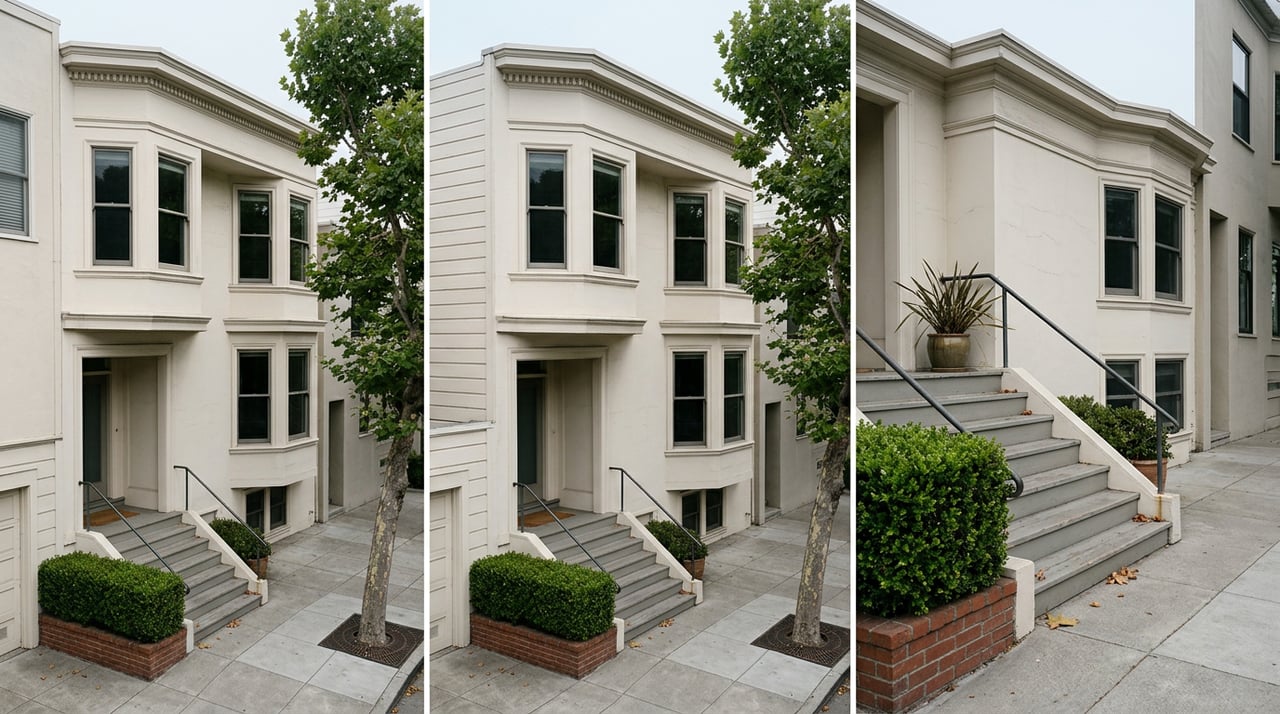
Most sellers brace for the wrong thing. They worry about a low appraisal, a buyer's financing falling through, or an inspector finding knob-and-tube wiring behind a wall. Those things happen, but they are not what typically adds weeks to a Castro Valley escrow. The real chokepoint is paperwork tied to a fact most sellers never think about until it is too late: Castro Valley is not a city. It is unincorporated Alameda County, and that status quietly rewrites the closing checklist.
A buyer touring homes in Castro Valley sees a normal East Bay neighborhood. A seller preparing to list discovers something different: a sanitary district with its own inspection mandate, a county environmental health department that governs septic systems the city of Oakland next door does not have to think about, and disclosure obligations tied to a fault line and fire maps that follow the hills rather than any city border. None of this shows up on a listing photo. All of it can stall a closing date if you start too late.
The Certificate Nobody Budgets For
The single most common surprise is a form almost no out-of-area buyer, and more than a few agents new to the market, have ever heard of: the Castro Valley Sanitary District's Private Sewer Lateral compliance certificate. Under Ordinance No. 179, adopted in September 2018 and effective July 1, 2019, every residential, commercial, and industrial property inside CVSan's boundaries must have a valid certificate before escrow closes. There is no carve-out for a well-maintained home or a motivated buyer waiving inspections. The district requires it regardless of the deal's terms.
The lateral in question is the private pipe that carries wastewater from the house to the public sewer main, and CVSan treats an aging, cracked lateral as a systemic problem, not just a homeowner's problem, because groundwater leaking into a broken pipe adds unnecessary flow to the treatment plant during storms. That is the policy reason behind the rule. The practical reason it matters to you is timing.
Some properties clear this step without anyone lifting a wrench. If the lateral was installed within the last 30 years, or at least half of it was replaced within the last 10, CVSan issues the certificate automatically once you check the district's permit portal. Everyone else has to schedule a CCTV camera inspection, at a cost of roughly $330, with a CVSan inspector present to witness it. If the line passes, you get a Compliance Certificate valid for 10 years. If it fails, the district issues a Notice to Repair, and the repair has to be permitted, completed, and re-inspected before the certificate is granted, or the seller has to file a time-extension request before close of escrow, since CVSan will not accept one afterward.
Here is the part that trips people up: a lot of Castro Valley's housing stock dates from the 1950s through the 1980s, which means a meaningful share of listings fall outside the automatic-pass window and need the full inspection cycle. If you assume this is a same-week formality, you are planning around the wrong timeline. Ordering the CCTV inspection before you list, not after you accept an offer, is what keeps this off your escrow's critical path.
When the Lateral Isn't the Issue at All
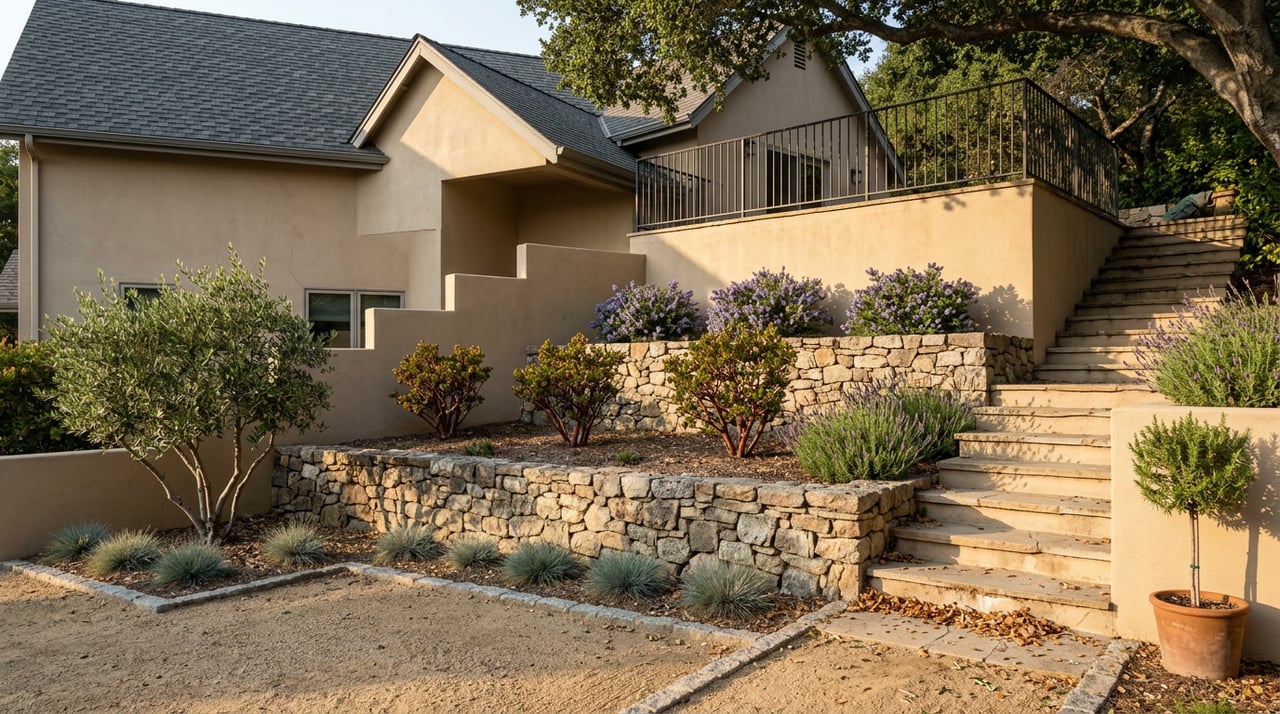
Not every Castro Valley property connects to CVSan's public sewer main in the first place. Foothill and canyon parcels, especially larger lots on the eastern edge of the community, are more likely to run on septic systems that fall under Alameda County Environmental Health rather than the sanitary district. That distinction changes which agency you are dealing with, which records you need to pull, and how much lead time a pre-sale evaluation requires. A septic system's age, tank condition, and any additions made to the home without matching permit upgrades all become relevant to a buyer's inspection in a way that a public-sewer connection never triggers.
The two paths rarely overlap, and confusing them costs time. A seller who assumes the CVSan certificate covers a septic property, or vice versa, ends up scrambling mid-escrow to identify the correct agency and start a process that should have begun before the sign went in the yard.
Flatland Sale vs. Foothill Sale
| Flatland, on CVSan sewer | Foothill or canyon, on septic | |
|---|---|---|
| Wastewater requirement | CVSan Compliance Certificate, CCTV inspection if not automatically exempt | Alameda County Environmental Health septic evaluation and records |
| Access | Standard public street | Often a private road or shared driveway |
| Fire hazard exposure | Typically outside mapped severity zones | More likely inside a CAL FIRE High or Very High Fire Hazard Severity Zone |
| Extra disclosure documentation | Standard Natural Hazard Disclosure | NHD and possible geotechnical review for slope work |
The table simplifies a real pattern: the closer a property sits to the hills, the more separate approvals stack on top of the standard California disclosure packet. None of these steps are unusual on their own. What is unusual is how many of them apply at once to a single foothill listing.
The Ground Comes With Paperwork Too
The Hayward Fault runs through central Alameda County, tracing a line from Fremont through Hayward, San Leandro, Oakland, and Berkeley. Some pockets of the Castro Valley hills also sit within mapped Alquist-Priolo Earthquake Fault Zones and State Seismic Hazard Zones, which is a specific reason the Natural Hazard Disclosure report matters here as much for fault exposure as it does for fire. The U.S. Geological Survey puts the odds of a magnitude 6.7 or larger earthquake on the Hayward Fault before 2043 at 33 percent. If a parcel falls inside a mapped Alquist-Priolo zone, state law requires the seller to disclose that fact to the buyer before the sale closes, using either the Natural Hazard Disclosure Statement or a Real Estate Transfer Disclosure Statement with equivalent language. The California Geological Survey maintains the official maps sellers are expected to check.
Fire exposure follows a separate map with separate obligations. Portions of the Castro Valley foothills fall within CAL FIRE's High or Very High Fire Hazard Severity Zones, and property in those zones carries its own point-of-sale requirement. Buyers and their insurers increasingly want to see recent evidence of defensible space, not just a box checked on a form. You can look up a specific parcel's designation through the state's Fire Hazard Severity Zone viewer.
These issues are not unique to Castro Valley. What is unusual is how often a single foothill property in this community sits inside both a fault zone consideration and a fire severity zone at the same time.
Shared Driveways Have Their Own Rules
Private roads and shared driveways show up often in the hillside pockets of Castro Valley. If no recorded agreement exists, or if the one on file is decades old and nobody can locate it, a buyer's lender or title company will ask questions that a flatland sale never raises. Pulling the recorded document, or confirming there isn't one, is worth doing before a buyer's attorney does it for you during their contingency period.
The One Place Unincorporated Status Saves You Money
Every friction point above traces back to the same root cause: Castro Valley answers to the county, not to a city hall. That cuts both ways. According to U.S. Title Records, cities across Alameda County are free to adopt their own transfer tax ordinance on top of the county's base rate. Castro Valley, along with the unincorporated communities of San Lorenzo, Ashland, Cherryland, Fairview, and Sunol, has no such ordinance, so a sale here is subject only to the standard county rate of $1.10 per $1,000 of sale price. On a $700,000 sale, that is $770 in transfer tax, full stop, with no city increment stacked on top. The same unincorporated status that hands you an extra sanitary district form also means one line item stays smaller than it would across the border.
Getting Ahead of Escrow, Not Behind It
The fix for nearly everything above is sequencing. Handle these before a buyer is under contract, not after.
- Check CVSan's permit portal for your address to see if a Compliance Certificate is already on file, and if not, schedule the CCTV inspection immediately.
- Confirm whether your property is on public sewer or septic, and if it is septic, contact Alameda County Environmental Health for the required records.
- Order your Natural Hazard Disclosure report early so you know your fault zone and fire zone status before a buyer's inspector does.
- Pull any recorded road maintenance agreement for shared driveways, or start the conversation with neighbors now if one does not exist.
Frequently Asked Questions
Does every Castro Valley property need a CVSan sewer lateral certificate? Every property inside CVSan's service boundaries needs one at time of sale. Properties on septic systems outside the district's sewer service area fall under Alameda County Environmental Health instead.
What if my lateral was already replaced years ago? If the full lateral was replaced within the past 30 years, or at least half of it was replaced within the past 10, CVSan's records may already show a valid certificate. Check the district's permit portal before assuming you need a new inspection.
None of this is meant to make a Castro Valley sale sound harder than it is. It means the sequence matters more here than in a straightforward city sale, and the sellers who get ahead of the sanitary district, the county's environmental health office, and the state's hazard maps close on schedule instead of renegotiating a closing date three weeks in. If you are weighing when to list or want a clear read on what your specific parcel requires, the BloomHomes Team has spent years walking Castro Valley sellers through exactly this sequence. Reach out through our sellers page or start with a free home valuation to see where your property stands before you set a listing date.
This article is general information, not legal, tax or financial advice. Consult a qualified professional about your situation.